Archimedes
AI agents that design physical things.
Give it an engineering goal. A swarm of agents writes designs as code, tests every one in a real physics simulator, and keeps improving the best. When a result doesn't hold up, it says so.
It starts with a few ideas.
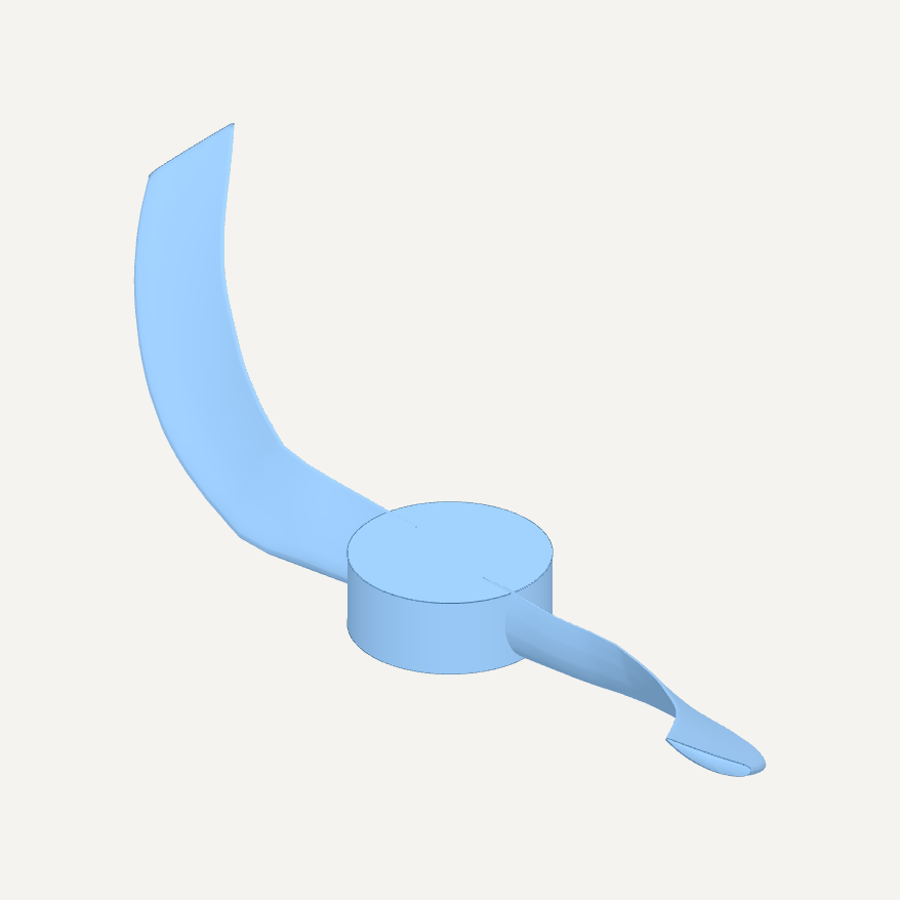
A stock drone propeller, six very different starting designs the agents wrote as code, and their first two tries.
9designs shown
Seven real problems. Here's what happened.

One propeller that flies and swims.
Underwater, a stock prop stalls its motor. Archimedes redesigned blade and gearbox together.
~90%as good as a propeller built for only air, or only water
Read the story →An AI data hall, cooled for less.
Cooling ran flat out and its hottest rack still overheated. The cheap fix gets 79% of the savings for under a quarter of the cost.
$227ksaved a year, 10.9% less electricity
Read the story →A turbine blade →25.5% less loss than a standard benchmark blade (2D).A one-way valve, no moving parts →2.5x better at blocking backflow than a published design, same size (2D).A low-flying wing →27% more lift under the same drag limit (2D).A low-spill mug →42% lower spill-and-near-miss score in 3D simulation.A crucible-chamber purge →21x faster gas flow between crucibles, cold test only.Have a problem like these? →Send us the goal and the limits; we'll run it.
It tells you when it's wrong.
Every leading design gets re-tested on a finer simulation. When something doesn't hold up, the report says so.
- Drone propeller: its first answer optimized the wrong thing.The first search tuned the blade on its own. Checked against the real motor, its score collapsed, so Archimedes rewrote the goal and searched again.
- Data hall: the first winner wasn't buildable.It assumed the 2008 cooling coils could run warmer water than they can. Verification caught it; the second search built that limit in.
- Crucible purge: true only when cold.A 2,500 °C check erased most of the advantage, so it's labelled a cold-flow result.
Have a design problem worth searching?
Early access. Send us the goal and the constraints; we'll run it.